"Our Target Is Not You": The Blast Radius of a Supply Chain Ransomware Attack

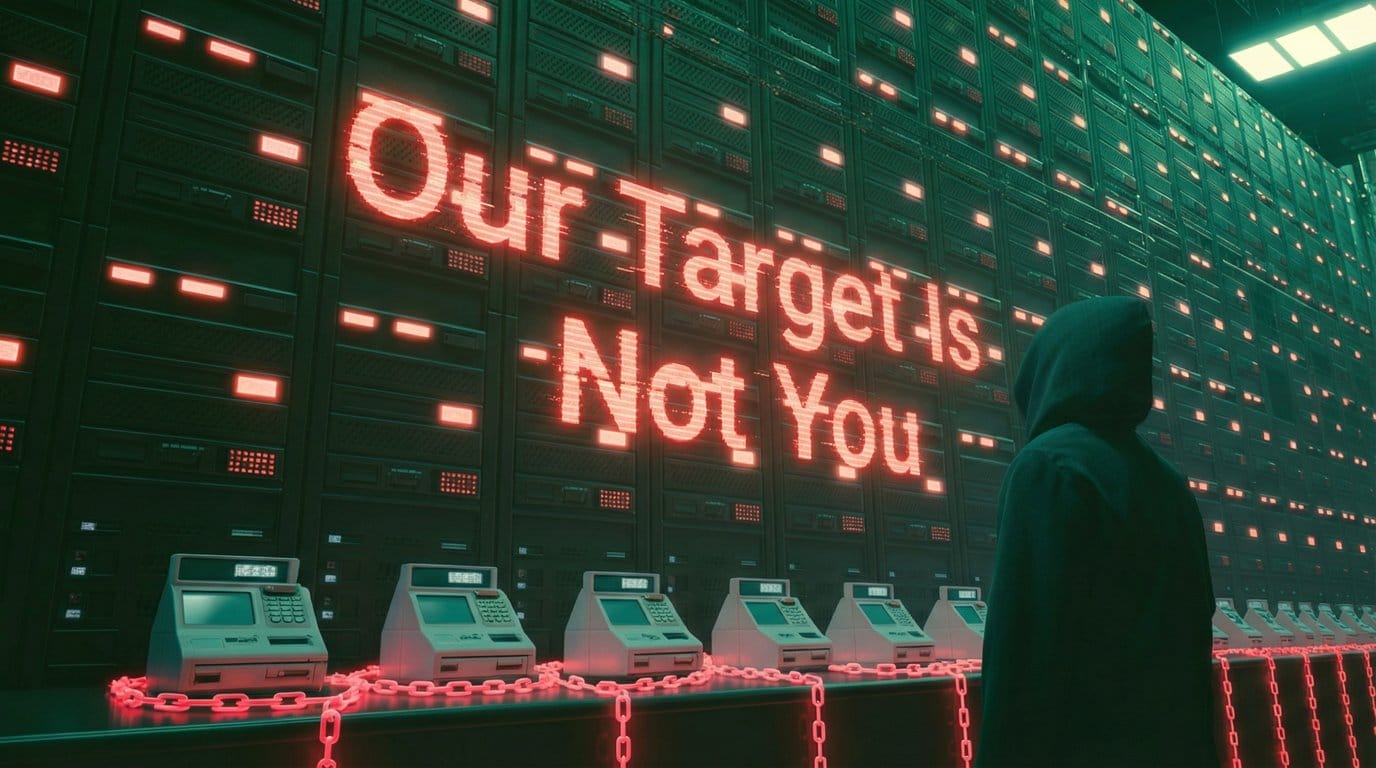
Supply chain attacks aren't just technical exploits; they create a tragic, unintended human theater. When the ransomware group compromised a software vendor, they didn't just lock up a corporate server—they encrypted the daily operations of every single small business relying on that vendor's point-of-sale software.
This transcript is not your typical 1-on-1 negotiation between a slick hacker and a panicked CISO. Instead, it is a surreal, heartbreaking digital waiting room. We see the collateral damage—small business owners—pleading for their livelihoods with a cold, bureaucratic extortionist who is only hunting for a corporate whale.
The $1 Million Waiting Room
Instead of targeted enterprise executives, the attackers are met in their chat portal by a chorus of confused, desperate end-users.
The victims trickling into the chat room represent the absolute bedrock of the local economy. They include a small liquor store , a bed and breakfast , and a rural lodge in a third-world country. They are all trying to figure out why their point-of-sale systems are suddenly locked.
The attacker, however, sets their anchor immediately. But it's not meant for the small businesses. It is a message meant for the parent company:
Attacker: "It cost's $1,000,000 in Bitcoin." Attacker: "Only the main company are able to purchase the decryption software."
Blocking the Collateral Damage
The victims try to explain their grim reality to the attacker. They don't have millions of dollars; they are just small operators. The attacker's response is cold, calculated, and entirely focused on upstream liability.
The attacker refuses to negotiate with the individual businesses. They state explicitly that the software company is their actual target, blaming them for the vulnerability.
Attacker: "Our target is a company that allowed a huge vulnerability in its system that led to a massive infection of [redacted-software-vendor]'s customer network."
The attacker is actively weaponizing the victims' panic. By locking up the small businesses and stonewalling their pleas, the attacker is manufacturing immense downstream pressure. They want the software vendor to pay the ransom to justify the trust of its customers.
To reinforce this psychological pressure, the attacker acts as a twisted, sociopathic customer service rep, redirecting the victims' anger back at the vendor:
Attacker: "[redacted-software-vendor] is responsible for you at this time. You are advised to contact them for a speedy resolution of your problems." Attacker: "Once again, we want to hold [redacted-software-vendor] accountable in this panel to solve all your problems."
"You Should Hack the Government"
The human element in this transcript is devastating. One victim, operating a hotel in a rural area, explains the brutal reality of their situation. They point out that they have suffered immensely, having barely survived without being able to trade fully for 12-18 months due to COVID lockdowns.
They simply don't have the cash to pay a ransom, let alone in American currency.
Victim: "So with hardly being able to pay our staff where do you think we will be able to get US Dollars to pay you?" Victim: "Our US exchange rate is currently [redacted-currency] to 1$. You should hack the [redacted-location] government because they will be the only ones who can afford to pay you in US$..."
Another victim points out the ultimate flaw in the attacker's grand strategy: the software vendor likely doesn't have the deep pockets the hackers assume they do.
Victim: "[redacted-software-vendor] sell software locally they don't make that kind of money as they once off sale only, I bought it 7 years ago and they they haven't charged a cent since" Victim: "By doing this you are putting our families livelihoods at risk, if we had money we wouldn't be using a cheap point of sale"
The attacker dismisses this entirely. They are completely blinded by their own assumptions about corporate wealth, repeating their rigid, bureaucratic script:
Attacker: "Obviously you don't know that our goal is not you, our goal is [redacted-software-vendor] which has the profits to cover all recovery costs."
The Silence of the Vendor
Perhaps the most chilling aspect of this entire transcript is who isn't talking. While the bed and breakfast owner, the liquor store operator, and the rural hotel manager are all begging for their digital lives in the chat, the actual software vendor is entirely absent.
The victims are left shouting into the void, acting as unwilling human shields in a financial standoff between a faceless criminal syndicate and an invisible software company.
Why This Negotiation Stands Out
This case is a masterclass in Weaponized Downstream Pressure. It highlights several chilling realities of the modern ransomware ecosystem:
- The Indifference of Scale: To the attacker, the ruin of a family business is just an administrative detail and a point of leverage. The victims' pleas about their livelihoods being at risk are ignored.
- Pressure to Pay: They didn't just want the vendor's money; they wanted to use the pain of the vendor's customers to force a massive payout. They explicitly state they want to hold the vendor accountable.
- The Illusion of Profiling: The attackers assumed the vendor had massive profits to cover the costs , a fact the end-users highly doubted due to the vendor's localized, one-off sales model. Hackers often base their ransom demands on flawed financial reconnaissance.
- Supply Chain Vulnerability: The small businesses did nothing wrong other than purchase a piece of software years ago. They became victims simply by proximity, forced into a $1,000,000 negotiation they never asked for.
In the end, this transcript proves that in a supply chain attack, the attackers don't view downstream users as people. They view them as a pressure campaign.